JAN
25
2024

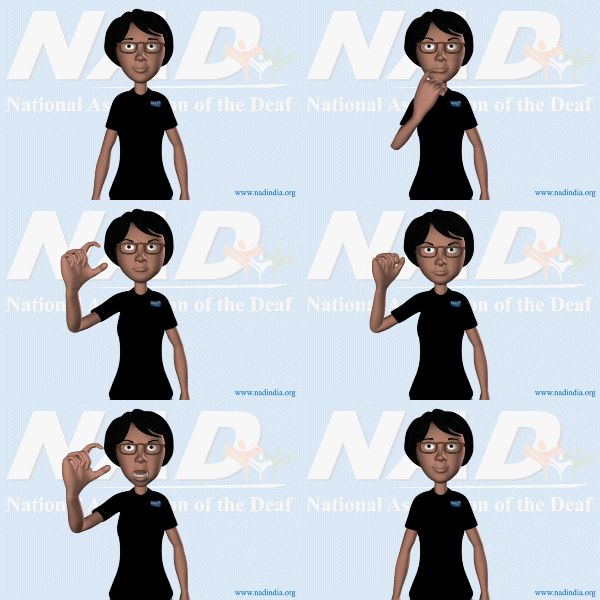
Watch the full explanation in Indian Sign Language
Indian Sign Language (ISL) Version
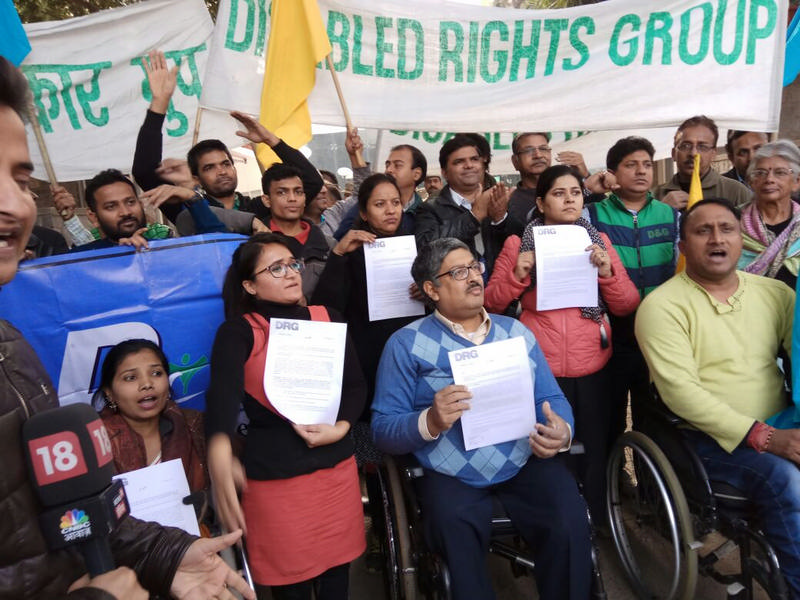
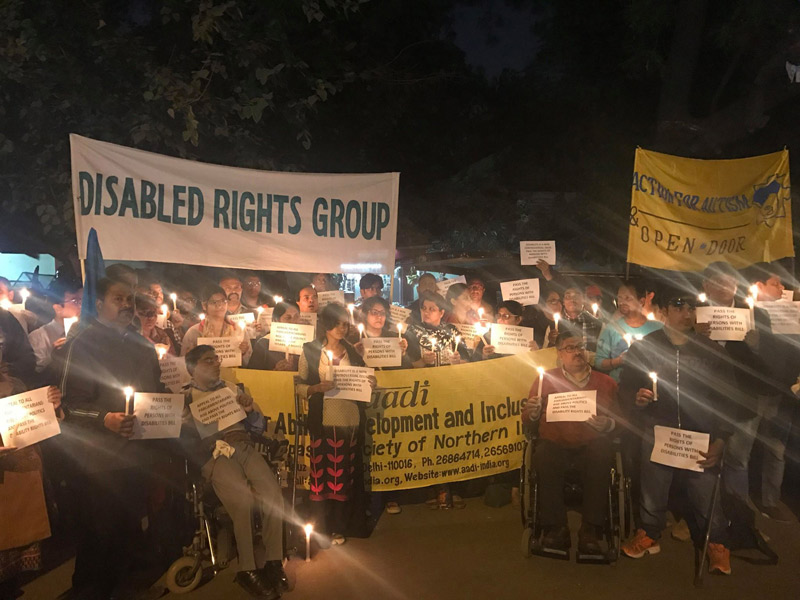
NAD's dharnas and protests are peaceful demonstrations fighting for and demanding the rights of the deaf community in accordance with PWD Act 2015. Through silent vigils and organized protests, NAD has successfully advocated for various rights and brought significant changes in policies affecting the deaf community. These peaceful demonstrations have been instrumental in achieving landmark victories for deaf rights in India.
A deaf person cleared the UPSC examination but was not accepted as an IAS Officer because of his deafness. When NAD learned about this, they organized protests outside the CCPD Office along with the Disabled Rights Group (DRG) team. The protest was successful, and he was accepted as an IAS Officer, setting a historic precedent for deaf individuals in civil services.
The Planning Commission had always included people with visual impairment and orthopedic challenges but never a deaf person. NAD demanded representation for the deaf community in the committee. Through persistent advocacy and protests, this demand was accepted, and Mr. A. S. Narayanan from NAD became the first deaf person to be involved in the Planning Commission.
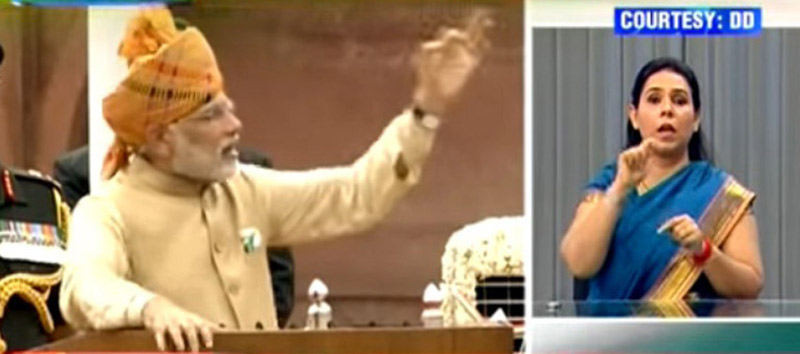
For 50 years, India never had access to sign language interpretation of public events on television. NAD presented this demand by organizing protests outside Shashtri Bhawan, New Delhi. The government accepted this demand, marking a significant step towards accessibility for the deaf community in accessing public information and events.
When NAD heard that the Indian Sign Language Research and Training Centre (ISLRTC) was getting merged with NIHH, they immediately demanded autonomy for ISLRTC. NAD organized strategic protests and advocacy campaigns because NIHH focuses on oralism while ISLRTC is sign language-specific. Because of NAD's persistent protests and advocacy, ISLRTC was made autonomous on 22nd September 2015, ensuring the preservation and development of Indian Sign Language.
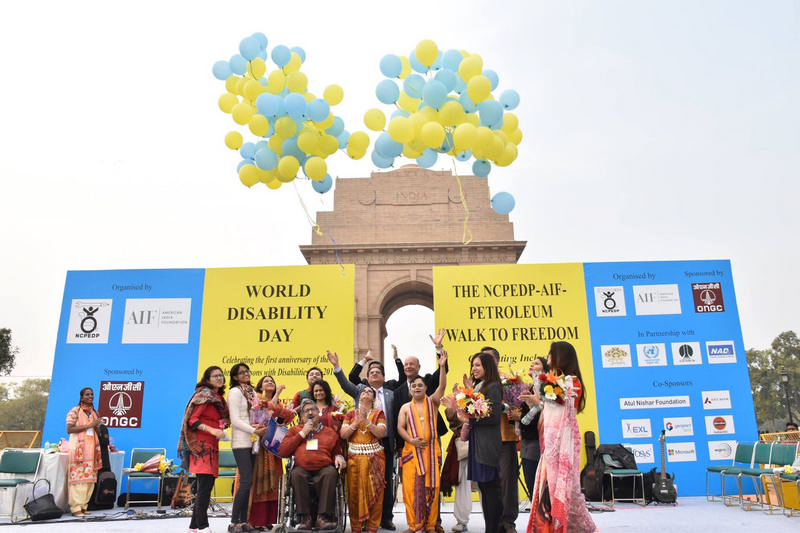
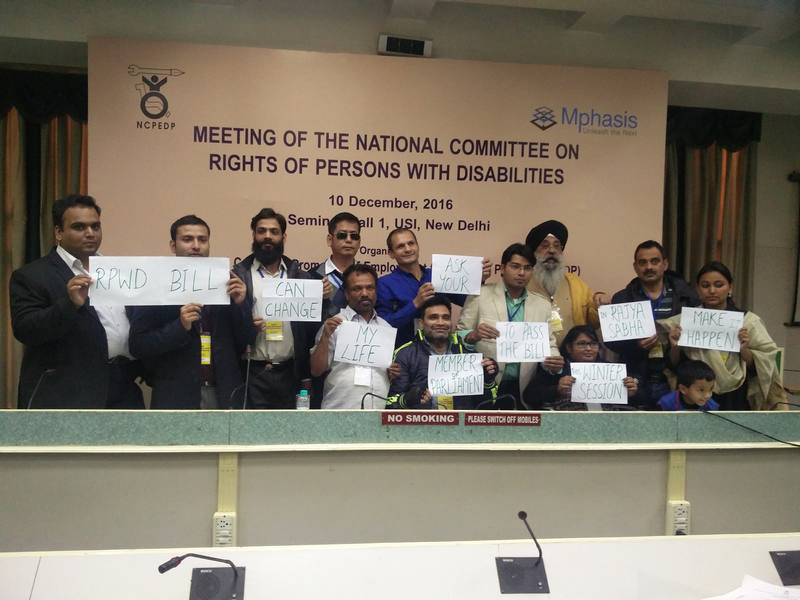
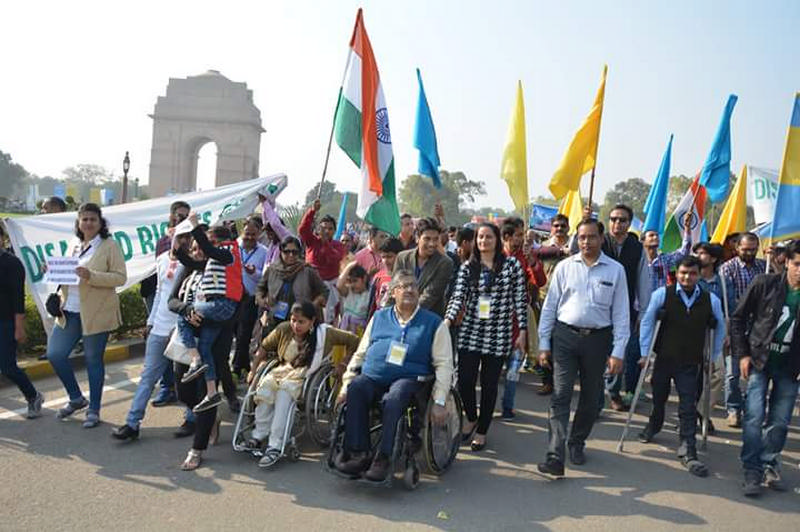
There were 58 bills presented in the Parliament, and only 8 had to be selected. To ensure the Rights of Persons with Disabilities (RPWD) Bill was prioritized, NAD organized a solidarity rally on February 3rd, 2014, at India Gate, New Delhi. The massive gathering and demonstration led to the bill being recognized and eventually passed, providing comprehensive rights and protections for persons with disabilities.
Through peaceful protests and dharnas, NAD continues to fight for the rights of the deaf community, ensuring their voices are heard and their demands are met.
Browse through our initiatives, conferences, meetings, and events